
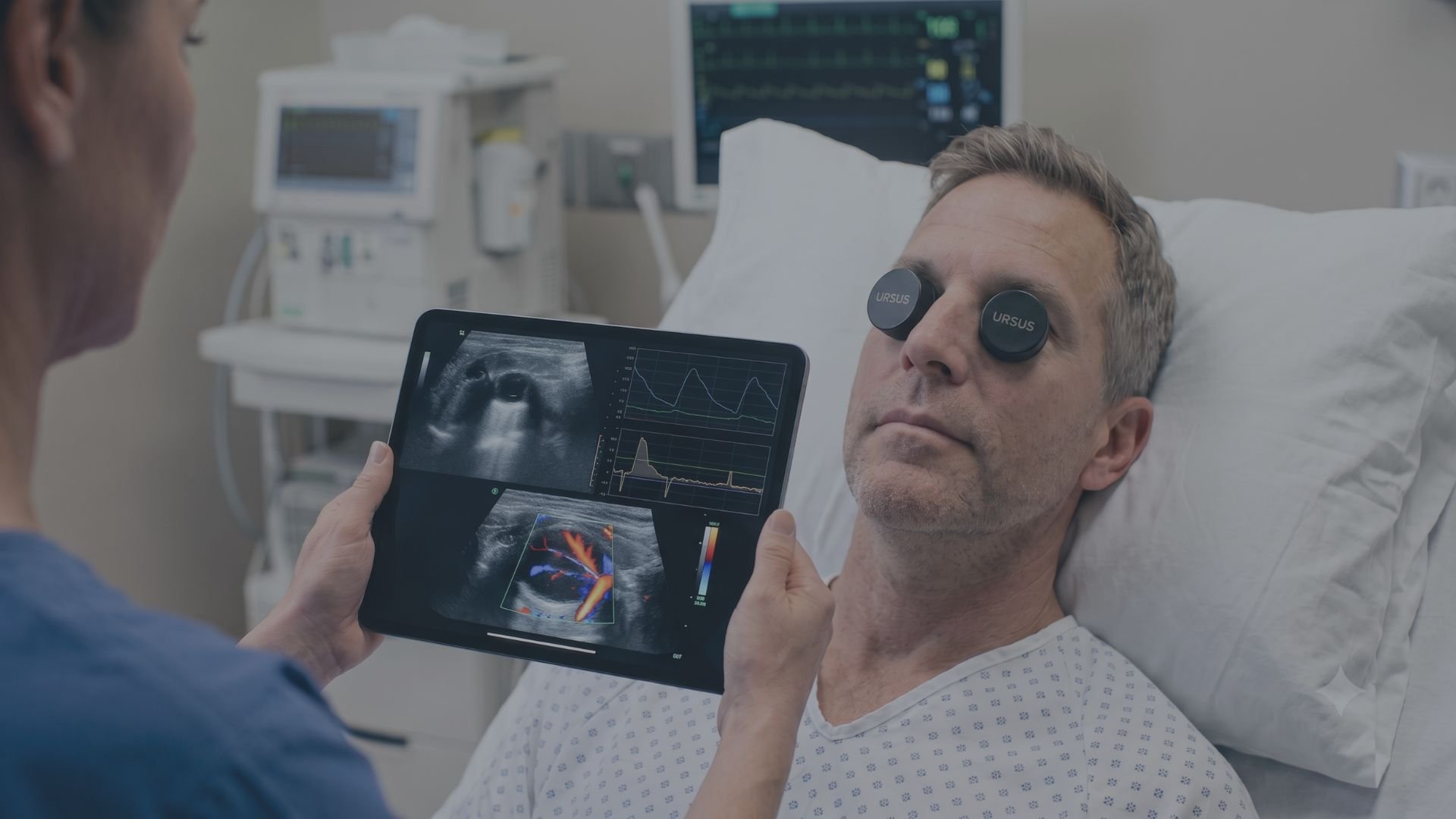
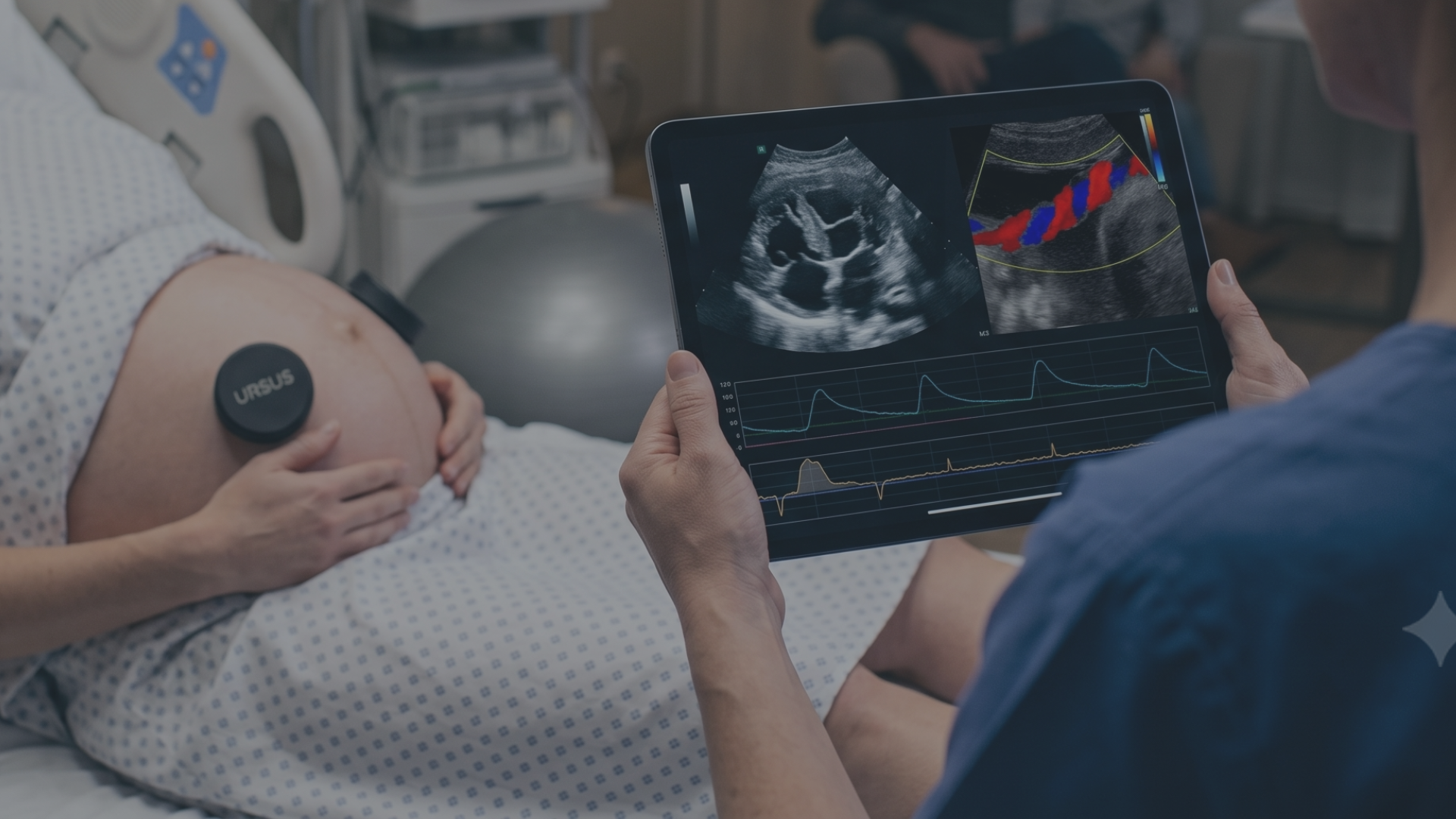

The world’s first autonomous, wearable ultrasound engine.
Meet ITUS.
Decades of ultrasound iteration have left the fundamental bottlenecks untouched, until now.
Eliminates operator dependency.
Breaks the 128-channel ceiling with unprecedented architectural scalability.
Compresses massive data with zero loss, streaming raw acoustic intelligence directly to AI.
Operates on minimal power, enabling true wear-and-forget deployment.
High-fidelity clinical insight is no longer tied to a console, heavy power demands, or a trained specialist. Continuous monitoring is unlocked right out of the box.

Engineered Superiority
Shattering the Channel Ceiling
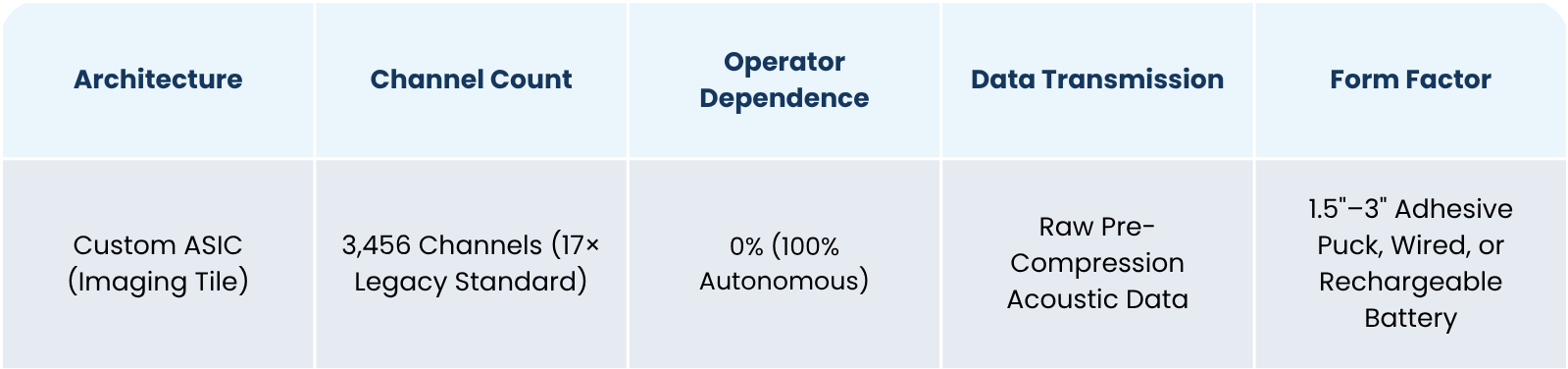
Legacy portable ultrasound tops out at 128 imaging channels.
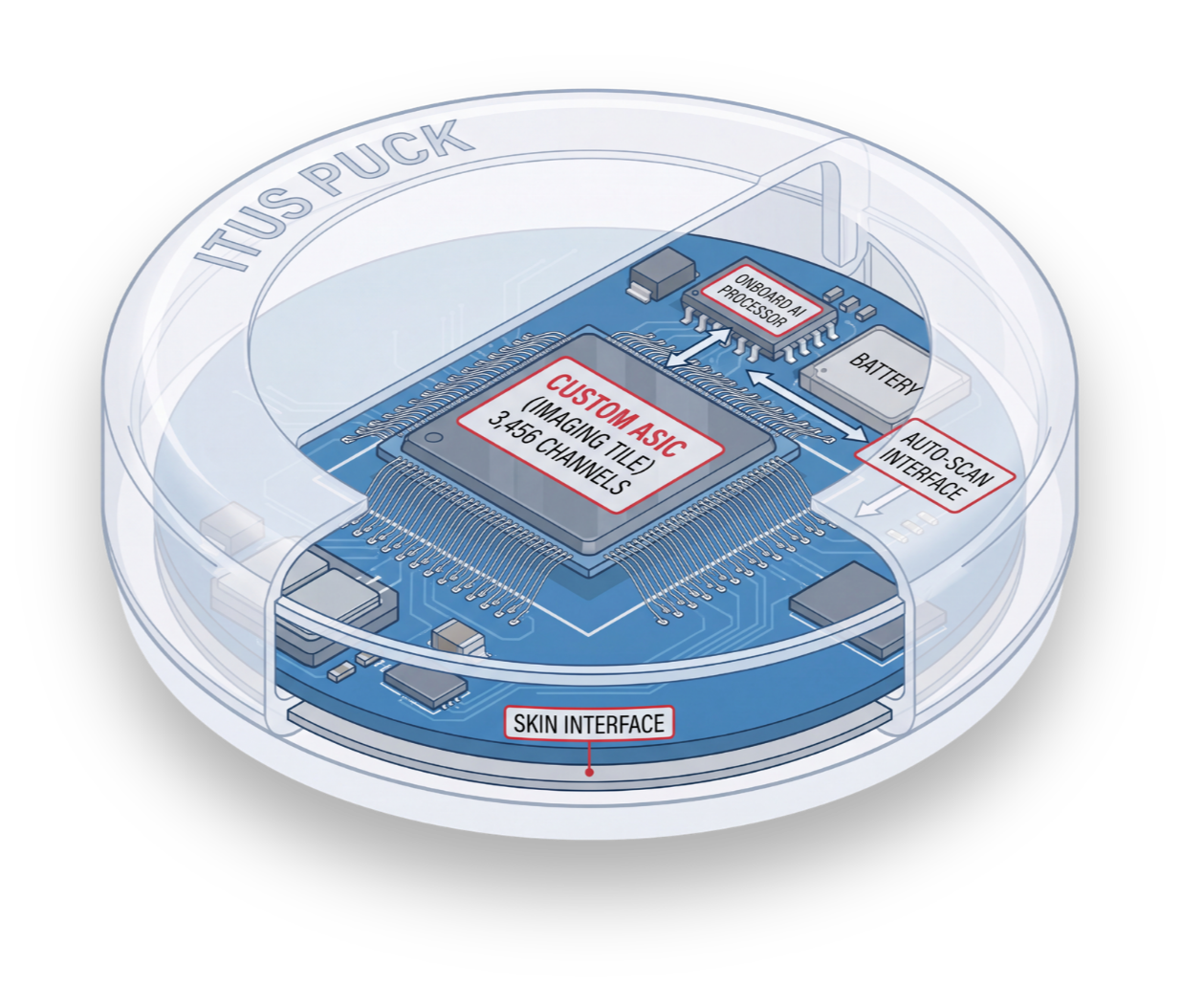
ITUS deploys a custom 3,456-channel ASIC Imaging Tile, capturing 17× more acoustic data in the exact same footprint at 80× lower power per channel.
AI-Native Raw Data Pipeline
Traditional consoles compress acoustic signals into lossy 2D grayscale images before displaying them.
ITUS feeds uncompressed, raw ultrasound data directly into onboard AI algorithms, revealing deep physiological trends, micro-vascular shifts, and subtle tissue changes invisible to the human eye.

Multi-Puck Synchronized Network
Single or multi-site deployment, on single or multiple patients.
Network multiple ITUS Pucks across a patient's body to cross-correlate real-time cardiovascular, respiratory, and organ data streams directly into a single diagnostic interface.
Continuous Monitoring, Anywhere
By replacing hand-guided transducers with an adhesive, battery-powered ITUS Puck, the platform delivers continuous, hands-free ultrasound monitoring without manual probe manipulation.
Elite Ultrasound, from Austere to Acute
Combat & Prolonged Field Care
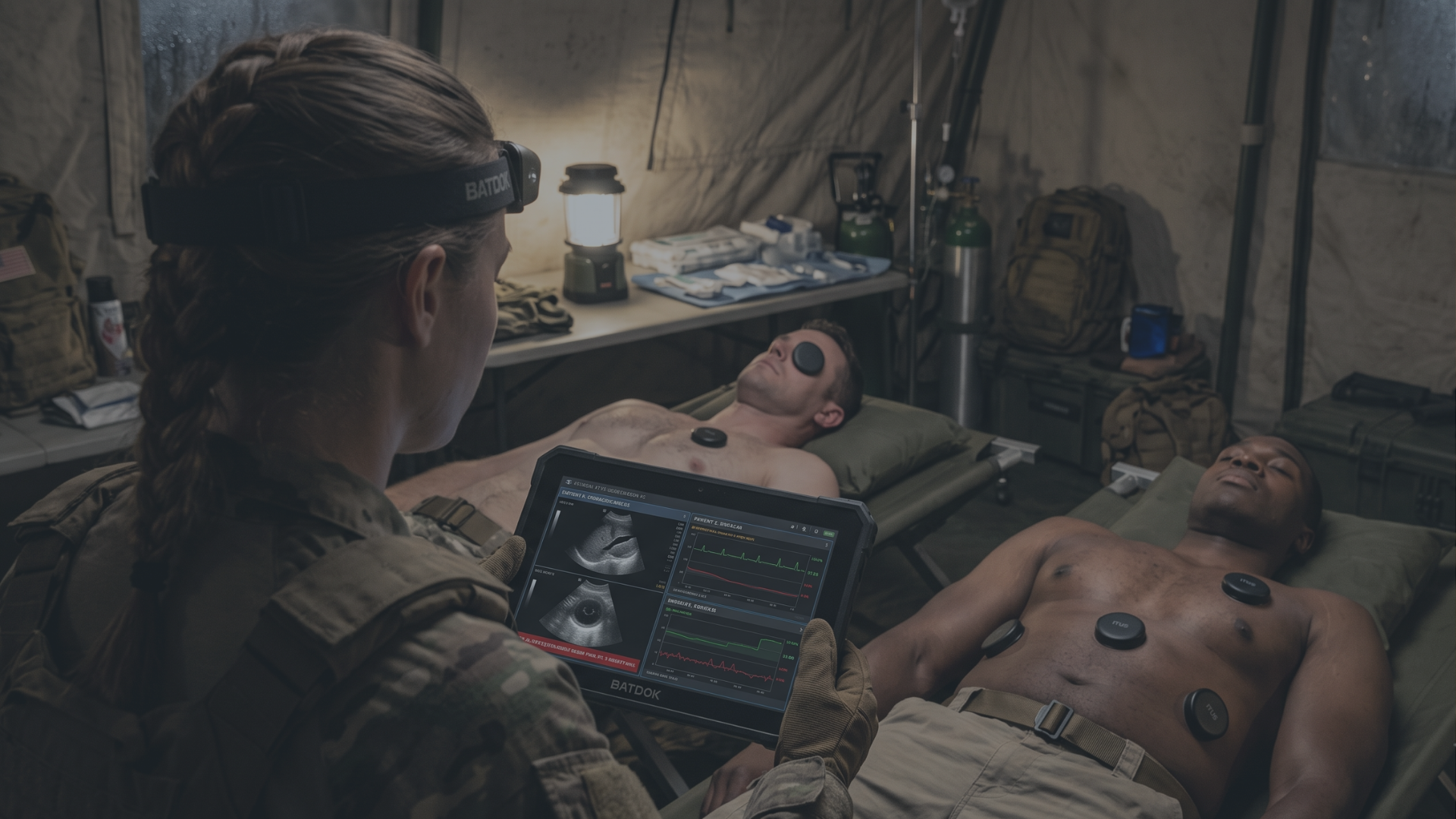
ITUS transforms delayed casualty evacuation by replacing intermittent manual checks with continuous, unattended diagnostic surveillance across 72-hour transport windows. The system operates autonomously at the point of injury, allowing a single medic to monitor multiple critical casualties simultaneously without drawing focus away from immediate care.
-
Mass Casualty Triage: Multi-puck deployment over major vessels or the abdomen alerts medics to silent internal bleeding and hemorrhagic shock before visual deterioration begins.
Adaptive Physiology Tracking: Automatically escalates scan frequency when abnormal waveforms or signs of collapse emerge, intensifying surveillance during critical moments.
Targeted Hemorrhage Mitigation: Delivers real-time assessment of internal bleeding, addressing the leading cause of preventable battlefield death far-forward in austere environments.
Austere Resuscitation & Surgical Support: Provides high-fidelity imaging data at the point of need to guide resuscitation decisions and medical regulating during prolonged evacuations.n text goes here
Emergency Care &
Hospital Surveillance
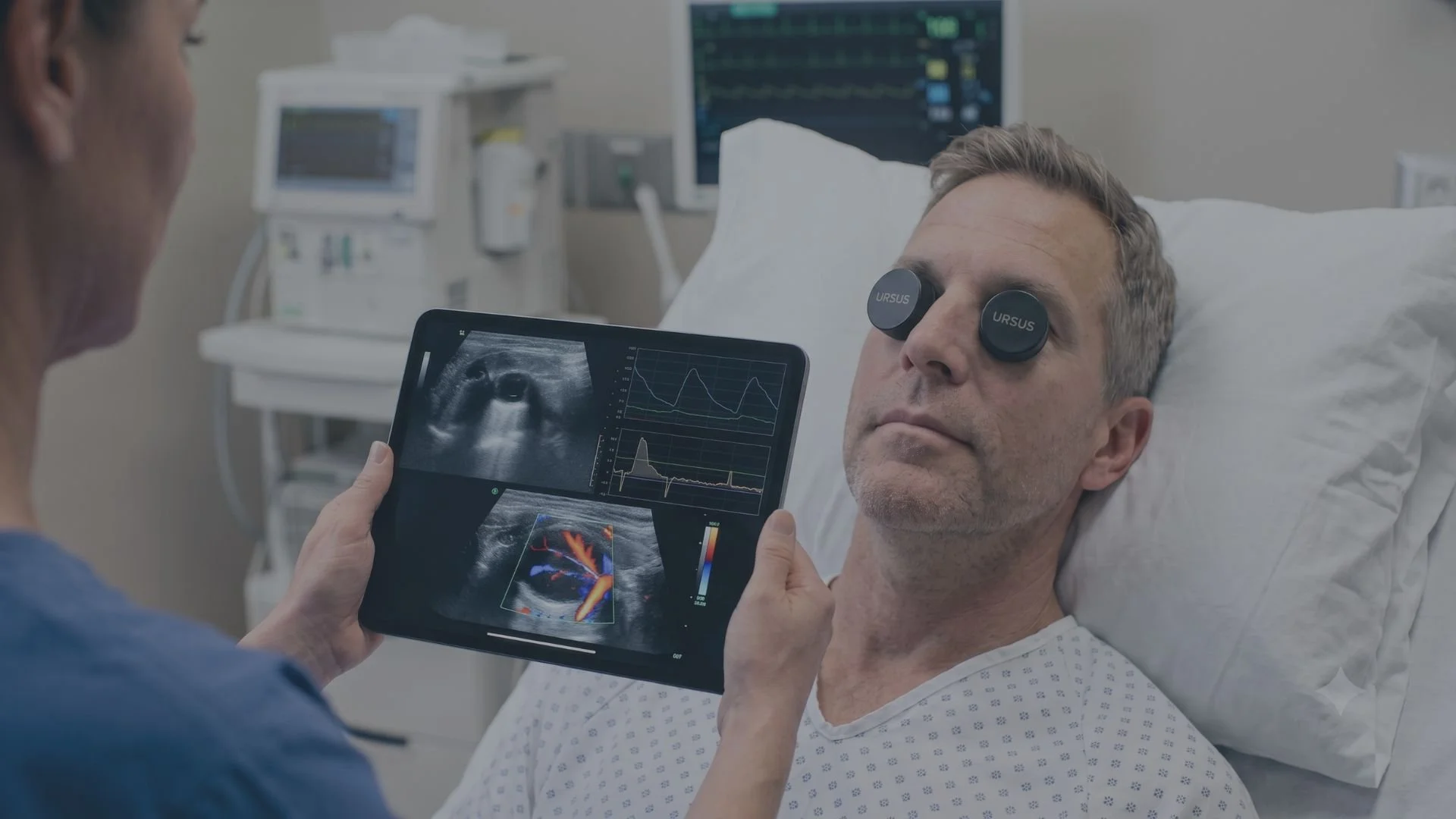
In clinical settings, ITUS flips the traditional workflow by keeping the acoustic sensor in place while clinical personnel remain mobile. The platform continuously monitors high-risk patients, alerting nursing and medical teams only when evolving patient physiology demands intervention.
-
Nurse Workload & ICU Floor Surveillance: Replaces repetitive manual probe assessments with automated tracking, reducing nursing friction and preventing clinical oversight between rounds.
Cardiac Surveillance & Shock Prevention: Continuous monitoring over the femoral or jugular vein detects oscillatory flow patterns and amplitude drops, signaling impending cardiogenic shock or arrhythmia.
Obstetric & Maternal Hemorrhage: Tracks uterine perfusion and inferior vena cava flow dynamics during active bleeding, delivering escalating alerts without requiring an ultrasound technician.
TBI & Neuro-ICU Dynamics: Measures optic nerve sheath diameter continuously to monitor non-invasive intracranial pressure trends as brain edema evolves.
Burn Unit & Microvascular Perfusion: Monitors wound margins to assess microvascular viability as inflammation peaks, informing surgical decisions before irreversible tissue necrosis occurs.
Post-Operative Sentinel Surveillance: Continuous site-specific monitoring captures true physiological trajectories rather than relying on isolated, episodic vital sign snapshots.
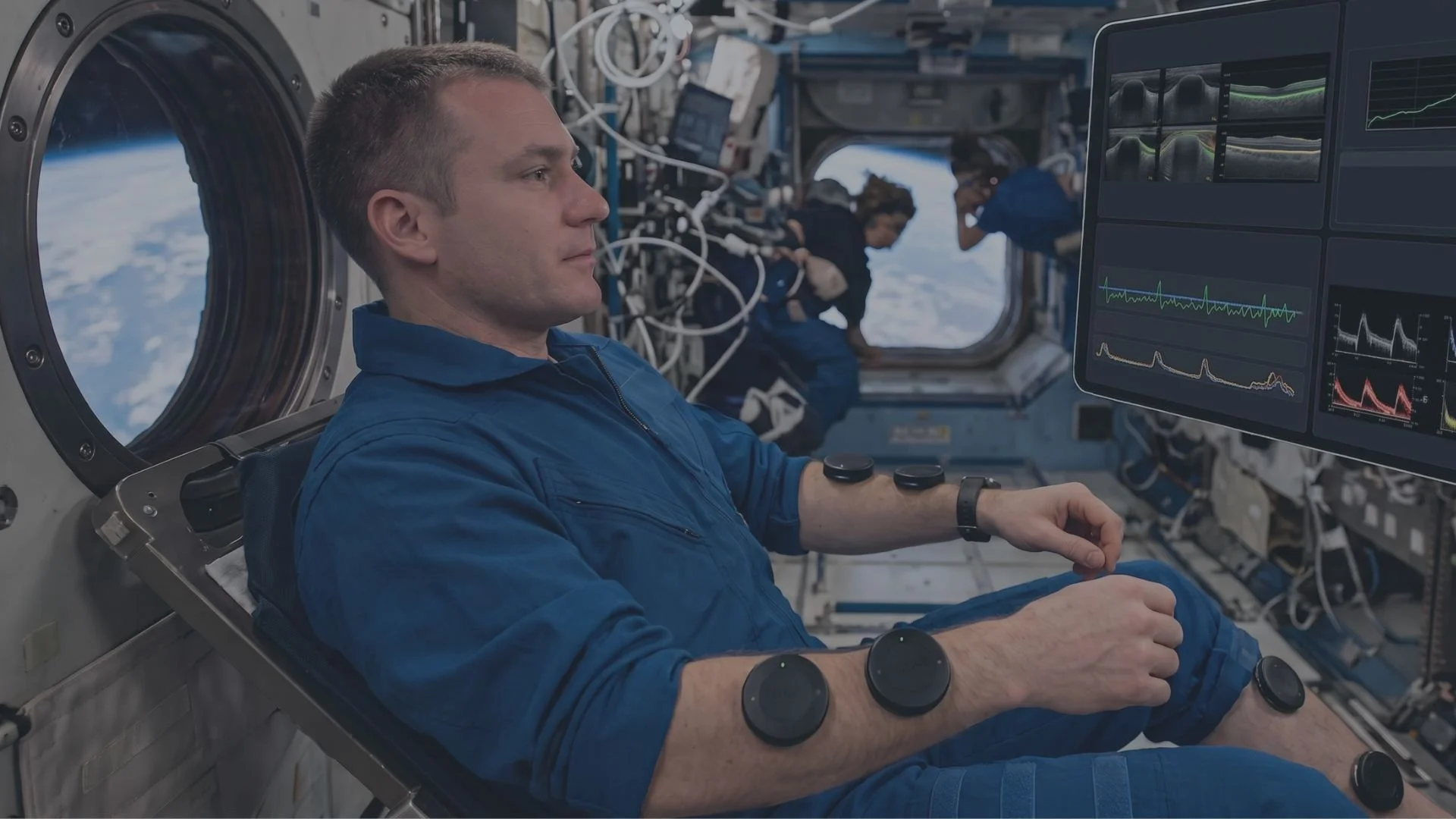
Spaceflight Physiology &
Frontier Environments
Engineered for extreme operational constraints, ITUS provides longitudinal acoustic monitoring where specialist medical personnel and bulky consoles cannot exist. The platform captures continuous, high-density physiological datasets to safeguard crew health in microgravity and off-grid domains.
-
Venous Thrombosis & Stasis Detection: Uses bilateral multi-puck configurations across the upper and lower body to detect loss of pulsatile flow and stasis during long-duration spaceflight.
SANS & Microgravity Fluid Shifts: Non-invasively monitors Spaceflight-Associated Neuro-ocular Syndrome by continuously tracking optic nerve sheath changes during space missions.
Autonomous Longitudinal Research: Builds rich physiological datasets over extended deployments without requiring manual probe positioning or operator expertise from astronaut crews.
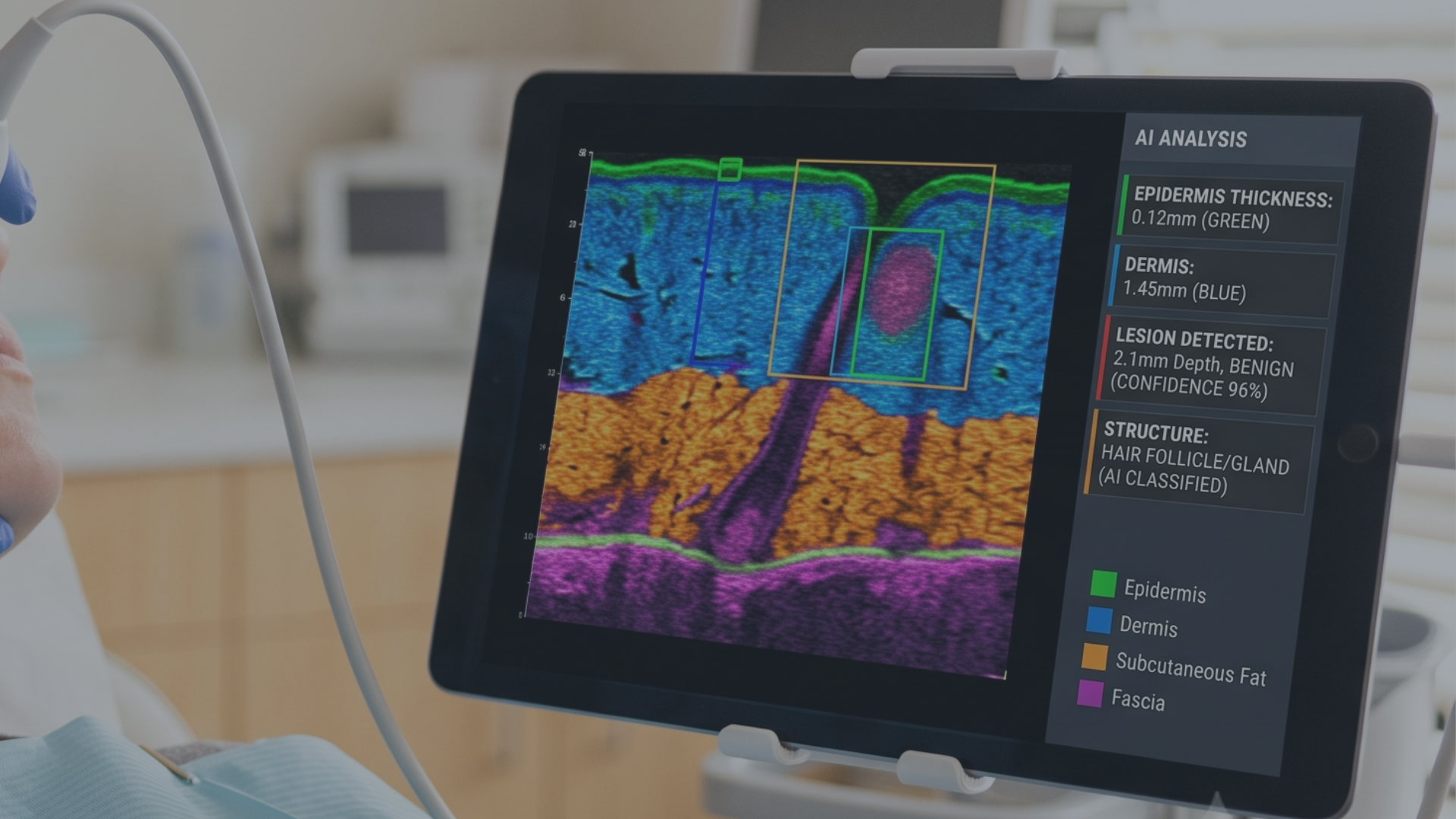
Advanced Aesthetic Dermatology
ITUS and U64 technology bring quantitative ultrasound precision directly into procedural and cosmetic workflows. The platform replaces subjective visual estimates with automated, real-time tissue mapping and depth measurement.
-
Real-Time Procedural Guidance: Embedded natively into devices (such as the Vivace Ultra RF platform) to provide real-time dermal visualization and precise needle-depth tracking without operator training.
Quantitative Tissue & Collagen Assessment: Autonomous measurement of structural tissue shifts and collagen density pre- and post-treatment, enabling objective efficacy tracking for aesthetic dermatologists, plastic surgeons, and clinical researchers.

-
Full-Scale Channel Count: 2,300 channels (3,456 in full custom ASIC beamformer)
Channel Density: 17× more imaging channels than any competing handheld ultrasound system; 17× more channels in the same footprint as conventional 128-element linear arrays
Imaging Tile Architecture: 288 elements per 1 mm × 8 mm Imaging Tile ASIC; each array element has its own dedicated processing channel
Tiles per Device: 1–4 Imaging Tiles per puck; 8 × IT configuration replaces conventional 128-element linear array
Multi-Puck Networking: Multiple adhesive pucks networked for bilateral or multi-site hemodynamic monitoring; multi-puck fusion combines sites into one AI-analyzed picture of patient status
Scalable Design: Custom ASIC moves beamforming into silicon; architecture supports flexible configurations and custom array types
-
Power per Channel: 80× lower power consumption per channel than any competing handheld ultrasound system
Cost per Channel: 28× lower cost per imaging channel than any competing handheld system
Operational Deployment: Battery-powered, fully autonomous field operation without external infrastructure
-
Setup Requirement: Place adhesive puck on body; no probe handling or operator expertise required
Autonomous Scanning: System automatically sweeps to locate target anatomy and establish optimal imaging frame
Onboard AI Analysis: Continuous, unattended AI-driven physiologic interpretation; runs without operator intervention
Programmed Monitoring: Scheduled or adaptive scanning intervals; replaces episodic snapshots with continuous trend data over time
Multi-Site Intelligence: Raw ultrasound data (pre-compression) from multiple pucks fed directly to AI for comprehensive patient status analysis
-
Core Innovation: Proprietary ASIC-based beamforming architecture eliminates operator dependency entirely and removes the 128-channel industry ceiling
Technical De-Risking: The beamformer — the hardest engineering problem — is already solved at quarter-scale; full-scale is an extension, not a new invention
Intellectual Property: 7 issued patents underpinning the architecture; 6 additional pending
-
Device Size: 1.5–3" diameter adhesive puck depending on configuration and battery requirements
Form: Wired or Battery-powered, wearable, autonomous in field
Clinical Integration: Hands-free patient monitoring; medic hands remain free for patient care
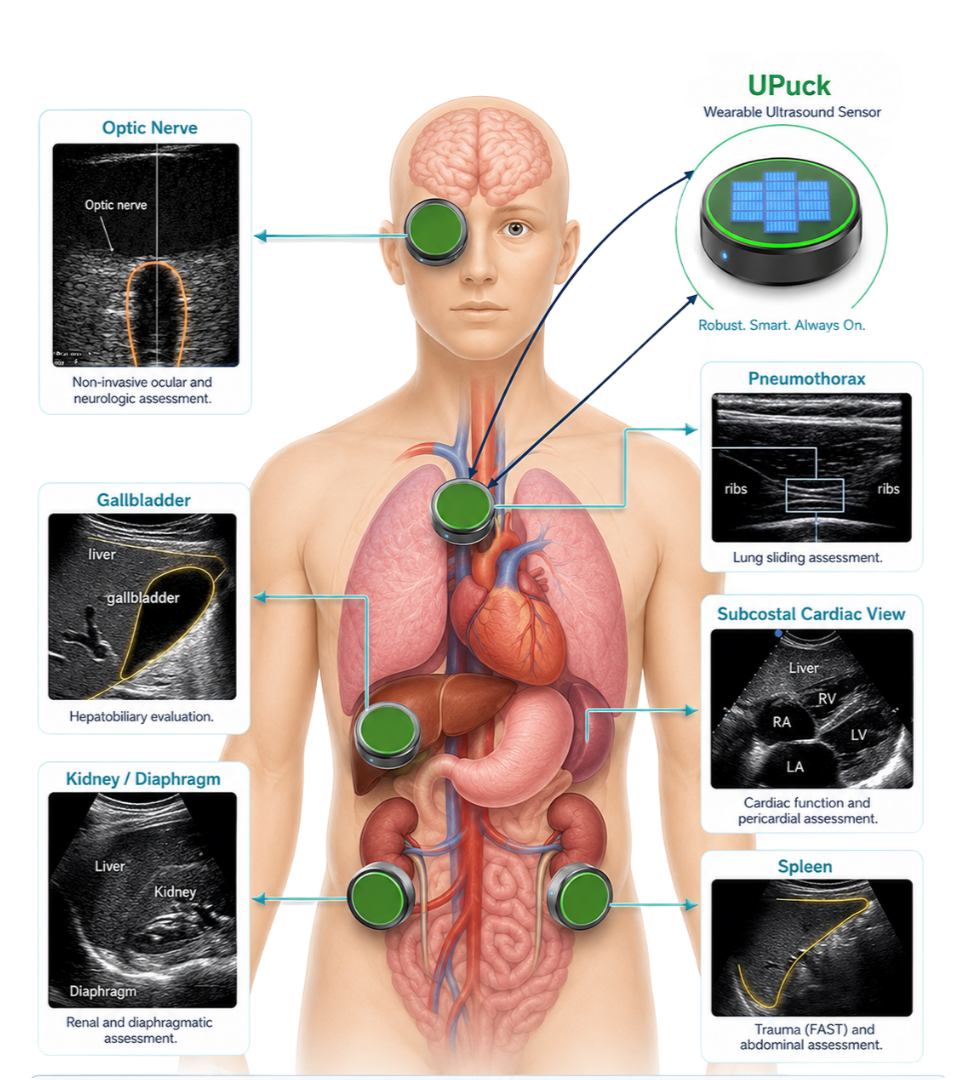
Transform any critical anatomical site, from the optic nerve to the abdomen, into a continuous stream of autonomous diagnostic intelligence.


Ready to Deploy Autonomous Vision?
Whether you are integrating ITUS into combat casualty care, hospital monitoring systems, or deep-space flight, partner with URSUS to bring hands-free diagnostic clarity to your environment.